
Duck feed
GREENFEED
Laying ducks

Duck feed plays a crucial role in rapid growth, improving meat and egg quality, and ensuring the ducks are healthy and adapt well to the farming environment. Using high-quality duck feed optimizes economic efficiency and minimizes risks in duck farming.

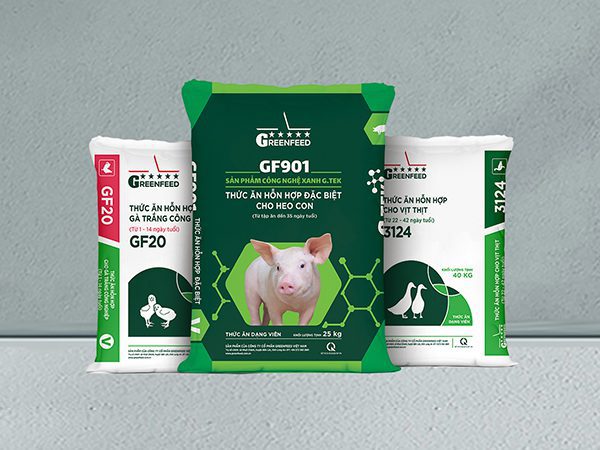
Greenfeed’s duck feed lines are designed to suit each stage of development, ensuring complete nutrition for rapid, healthy growth and high productivity.

Duck

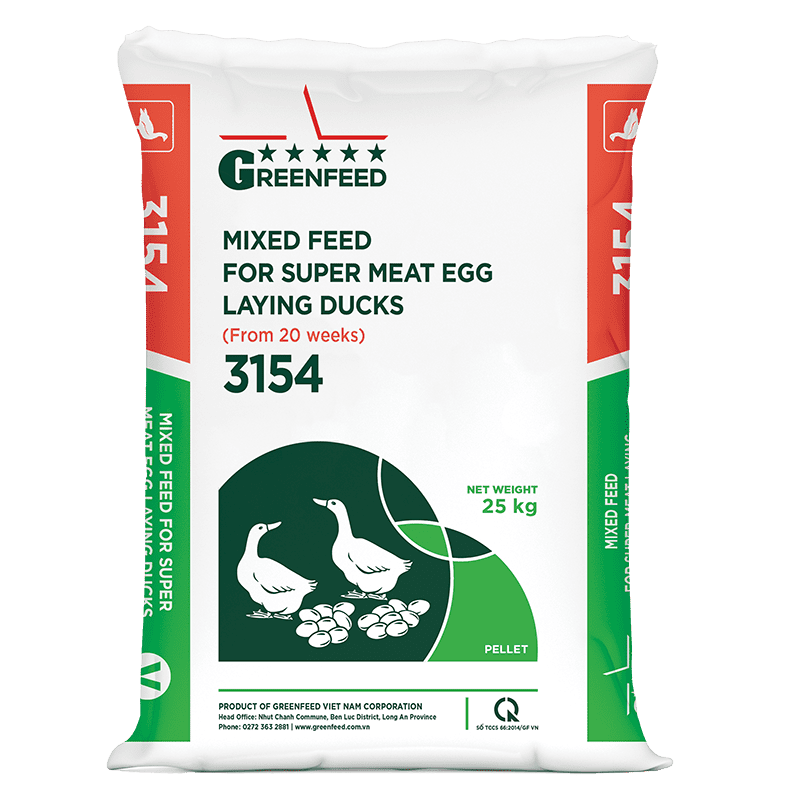
Mixed feed for super meat egg-laying ducks (3154)

Contact
Detail

1. The Role of Feed for Ducks

Compared to chickens, ducks have the following characteristics: They eat more, grow faster, and are highly dependent on feed quality. Therefore, feed for ducks directly affects: Weight gain rate, meat quality, and survival rate.

2. Classification of Duck Feed Based on Nutritional Needs

Each stage of duck development has different nutritional needs. Therefore, Greenfeed duck feed is specifically designed for each stage of the animal’s life:

Ducklings: Easily digestible, rich in nutrients
Benefits: Helps increase survival rate

Meat ducks: Increases energy for optimal weight gain
Benefits: Shortens rearing time

Laying ducks: Supplements calcium, improves egg quality
Benefits: Increases productivity

3. Criteria for Selecting Duck Feed

Greenfeed duck feed ensures the following important criteria:

  • Nutritionally balanced (protein, energy, minerals)
  • Easily digestible
  • Free from banned substances
  • Suitable for each stage of development

4. Solutions for Optimizing Feed Costs in Duck Farming

In addition to providing feed for ducks, Greenfeed also offers consulting services to help customers optimize costs:

  • Introducing nutrition and feeding programs suitable for the ducks’ physical condition: Feeding the right amount at the right time, avoiding excess and waste.
  • Providing detailed guidance on methods for controlling the farm environment: Appropriate temperature and humidity, reducing stress to improve absorption.
  • Advising on biosecurity measures to limit disease outbreaks and reduce medication costs.
  • Monitoring growth at the farm alongside customers: Adjusting feed according to each stage, avoiding prolonged rearing time to save costs.

5. Current Trends in Duck Feed

Greenfeed continuously innovates and applies green, healthy technologies to keep up with modern farming trends, ensuring:

  • Proud to be a sustainable feed brand: Reduced antibiotic use, increased use of enzymes and probiotics
  • Optimized performance: Increased conversion rate, reduced FCR
  • Transparent ingredients, ensuring food safety

6. Why choose Greenfeed duck feed?

Greenfeed duck feed helps:

  • Reduce disease risks
  • Increase stable productivity
  • Optimize long-term costs
  • Improve output quality

In the context of fluctuating raw material prices and increasing competition, using effective duck feed is key to sustainable development for farmers.
FREQUENTLY ASKED QUESTIONS ABOUT DUCK FEED

1. What is the best type of duck feed?
The best duck feed is one designed for each stage of development (ducklings, meat ducks, laying ducks), ensuring complete nutrition such as protein, energy, vitamins, and minerals. In addition, the feed should be easily digestible, free of banned substances, and promote rapid, healthy growth in ducks.
2. What should ducks eat to grow quickly?
To promote rapid growth, duck feed should be high in energy and protein, combined with added vitamins, minerals, and digestive enzymes. Furthermore, ensuring a clean environment and sufficient drinking water also enhances growth efficiency.
3. Should ducks be fed rice or natural food sources?
Rice, vegetables, or natural food sources can be combined, but they should not completely replace commercial feed. The mixing should be done appropriately to avoid nutritional deficiencies that could affect productivity and the health of the flock.
4. What should ducklings eat for good growth?
Ducklings need food that is:
- Easily digestible
- Rich in protein and energy
- Supplemented with vitamins and minerals
This helps increase survival rates, develop the digestive system, and promote uniform growth from the early stages.
5. How often should ducklings change their feed?
Feed should be changed according to each stage of development, usually divided into:
- Ducklings
- Growing ducks
- Meat or laying ducks
The transition should be done gradually over 3-5 days to avoid feed shock.
6. What causes slow growth in ducks?
Some common causes:
- Insufficient nutrition in the feed
- Poor feed quality
- Unsuitable rearing environment (damp, dirty)
- Lack of water or poor management
- Disease
7. Do ducklings need vitamin and mineral supplements?
Yes. Supplementing with vitamins and minerals helps:
- Increase immunity
- Support digestion
- Improve growth
- Enhance meat and egg quality
8. How to reduce feed costs for ducks?
To optimize costs, farmers can:
- Choose feed with a good FCR (Feed Conversion Ratio)
- Feed the correct rations
- Reduce feed loss
- Combine natural food sources appropriately
- Manage the rearing environment well
9. Does feed affect the quality of duck meat?
Yes. Duck feed directly affects:
- Lean-to-fat ratio
- Meat firmness
- Product flavor
- Food safety
10. Should you mix your own duck feed?
It is possible to mix your own feed, but you need knowledge of nutrition to ensure a balanced ration. If mixed incorrectly, ducks may lack nutrients, grow slowly, and increase rearing costs.
11. How much water do ducks need to drink each day?
Ducks need a considerable amount of water, usually 2-3 times the amount of feed. Clean, sufficient water helps ducks digest food well, grow quickly, and reduces the risk of disease.
12. Should antibiotics be used in duck feed?
The current trend is to limit the use of antibiotics in duck feed, instead using enzymes, probiotics, and biological solutions to ensure food safety and sustainable development.